CatalogueWebsites, ads & promotion

Complex website or web app

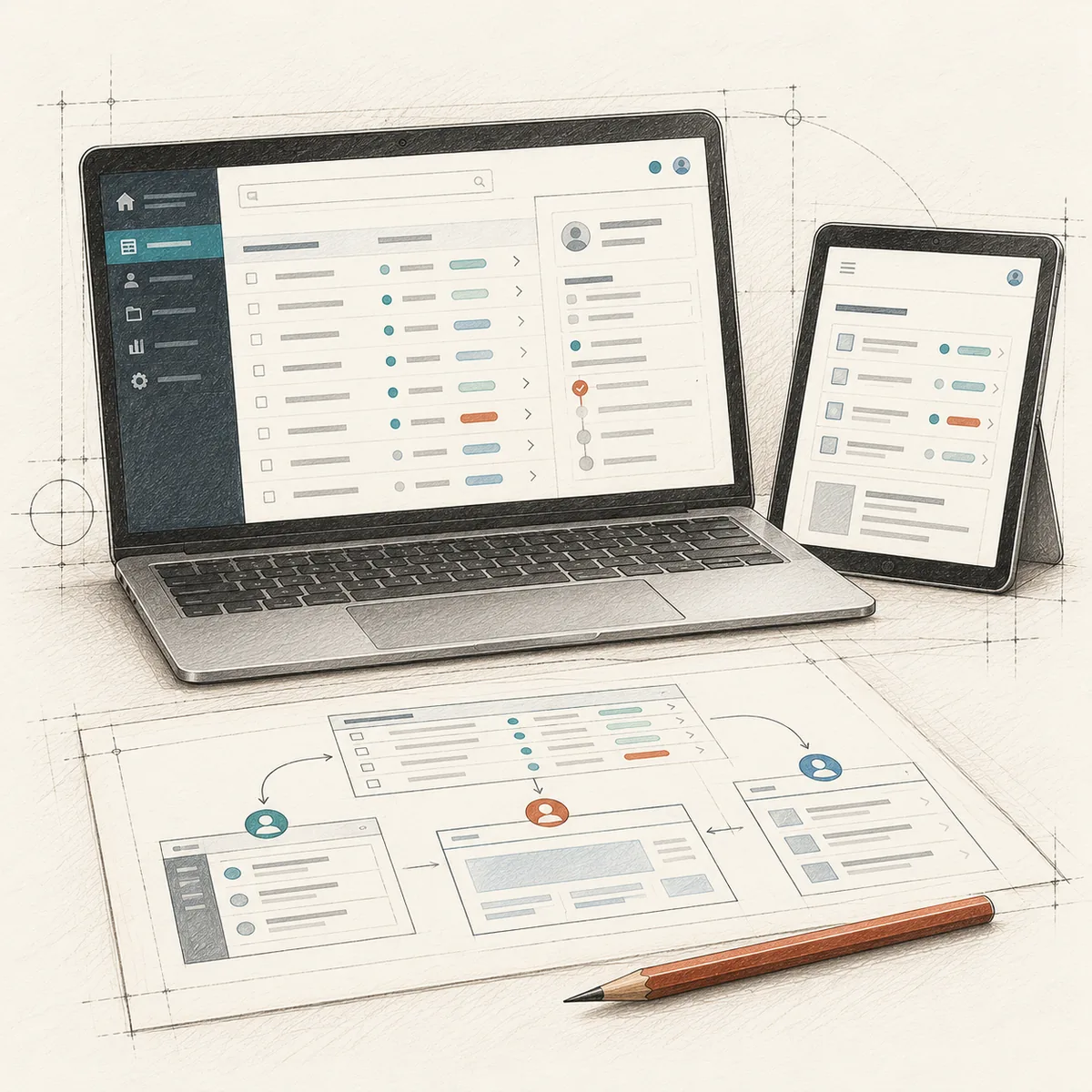
Customer portals, bookings and connected tools, built in agreed stages around a useful first version.

by written quotePrice and timing per stage · prototype is not a live service

Starting scope
Written quote by stage: users, key journeys, screens, languages and integrations agreed first.
What you receive
An agreed brief and prototype, a first usable version, acceptance checks, access and handover documentation.
By separate quote
Hosting, licences, paid services, bulk migration, specialist reviews and ongoing operation are identified separately.

An example of our work

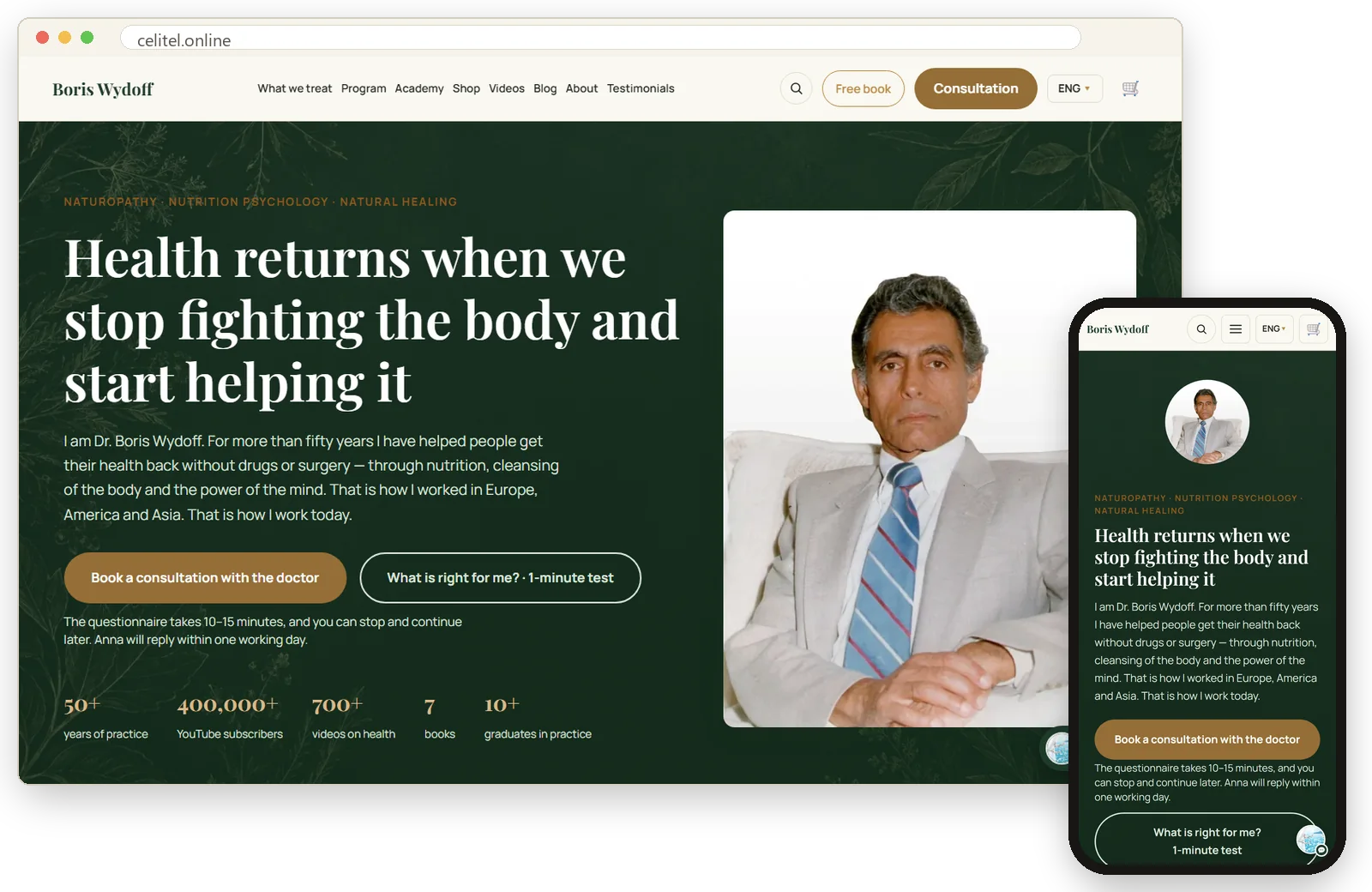
A doctor and author’s website: celitel.online

7 languages · catalogue · publications

A doctor and author’s website

The task. Bring programmes, books, videos and consultation enquiries together for readers in several countries.

What we built. Public programme and academy pages, material catalogue, articles, videos and consultation-form links in seven languages.

Open the site: celitel.online ↗

Real studio project: celitel.online, a multilingual site with public programmes, a learning-material catalogue, articles, videos and consultation links. Its public pages show our content and interface work, not an audit of private records, access controls, payments or medical compliance. The complete project is not a fixed-price package.

More about this serviceHow the work goes, an example and what we check before handing over

When a website needs to do real work

For a customer portal, booking service, internal workspace or a site connected to several tools. We start with the smallest useful workflow rather than assuming every possible feature belongs in the first release.

Customer and team workspaces

Accounts, requests, documents, status updates and a staff view can be designed around who actually uses them. We agree what each role may read or change, how access is removed and which actions need a person's approval.

Bookings, orders and messages

Plan availability, confirmations, cancellations, reminders or payment steps where needed. We select established services for specialist functions and test failure cases. A click is not proof of payment, a delivered email or a completed booking.

Connect your existing tools

CRM, email, payments, accounting or a catalogue may be connected after checking the provider's API, access and limits. We define which system owns the data, how duplicates are avoided and what happens if a connection fails. Unknown feasibility is investigated before a fixed implementation quote.

Content, languages and ongoing use

A public site, editing tools and multilingual pages can sit alongside the working service. We agree what you will manage yourself, what needs technical support, running costs and a practical export or recovery procedure. Sensitive or regulated data requires a separate suitability review.

A project you can review in stages

Each stage has a deliverable, price and acceptance decision. You know what is being approved before the next stage begins; a prototype is not mistaken for a production service.

  1. Define one useful result

    Describe today's process, people, data and constraints. Separate the first release from later ideas. Record assumptions and anything that needs a feasibility check.

  2. Walk through a prototype

    Review representative screens and their error or empty states using fictional data. Agree the scope, permissions, technical choices and checks before implementation.

  3. Build and review the first version

    Implement the agreed journey in a test environment. Show progress and check roles, integrations, failed requests and repeated actions, not just the happy path.

  4. Approve launch and handover

    Review the agreed checks, recovery route, access, costs and instructions. Launch only after approval; list any remaining issues and the support arrangements.

Example: a repair-request portal

An illustrative brief, not a client result or a working portal. First release: submit a request, let a coordinator review it, then assign it to a technician. Payment, live stock, a mobile app and AI are not automatically part of this example.

Three roles, different access

A customer sees only their own requests. A coordinator reviews and assigns permitted requests. A technician sees only assigned work. Access is checked on the server; hiding a button is not an access-control test.

A repeated click or a failed message

Repeating submission must not silently create duplicate work. If the email service fails, keep the request visible to the coordinator and provide an agreed way to check and retry.

A change after approval

Adding payments or access to all historical customer records changes the scope. Assess the data, risks, cost and acceptance checks before changing the implementation.

Download the example project brief ↓

What must be checked before handover

  1. Useful journeys and permissions

    Try the agreed roles and workflows, including attempts to read another customer's data. Verify server-side decisions and appropriate approval steps in the test environment.

  2. Connections and failure handling

    Test successful, failed and repeated operations with approved test accounts. Record what the provider confirmed and what remains unverified.

  3. Screens and practical use

    Check mobile layouts, keyboard navigation, forms, useful errors and every ordered language. Review load or accessibility tests only against a written, agreed target.

  4. Ownership and recovery

    Hand over the agreed source or configuration, accounts, deployment notes, dependencies, recurring costs and instructions. Check the agreed backup/export and restoration procedure and record support responsibilities.

What you get

Full scope in detail

We turn a working process into a clear brief, prototype and staged implementation. Users, permissions, data and integrations are agreed before development. You review each deliverable and its checks before launch. Price, timeline, handover and running costs are recorded in writing, rather than hidden behind a list of features.

  • Discovery and prototype scoped and priced before work starts.
  • Agreed user journeys, access rules, integrations and failure handling.
  • Two revision rounds within each agreed stage, acceptance checks and handover.

Timing and scope

Timing
Agreed in writing per stage, after scope, materials, access and dependencies are confirmed
Revisions
2 rounds
Not included
Third-party fees, domain, hosting, large migrations, new features, specialist reviews and ongoing operation. Discovery and prototype have their own agreed scope and cost; no free complete application.
What we need from you
A decision-maker, main user journey, priorities, tools to connect and budget constraints. Fictional sample data first; access later by role-based invitation, no secrets in this form.
After delivery
For 14 days we fix our own errors free of charge. Timing starts once we have your materials and the deposit.

Price: by written quote

No VAT charged: TVA non applicable, art. 293 B du CGI.

Describe your project

Selected service: Complex website or web app

You get a human reply within 48 hours: quote, question, or honest no.

Before you send

  • What do people do today, and which task should the service make easier?
  • Who will use it, what should each person see, and which existing tools must connect? Use fictional examples, not customer records.
  • Send your current site, priorities, budget range and deadline if known. Access is arranged later by invitation; no passwords or API keys here.

A rough description is enough. A person replies within 48 hours. We can clarify requirements, prototype screens and agree stages by email; a call is optional.

File (optional)
No file chosen

A brief, a photo, a spreadsheet — whatever explains the task faster than words. Up to 8 MB, stored with our hosting provider. Please don't send sensitive personal or medical documents through the site.

Prefer email, or having trouble with the form? contact@castel.studio

Before starting a larger project

Do I need this rather than a small website or shop?

Not always. A public presentation site, a single offer page or a standard shop may be enough. This service is for connected workflows, roles or requirements that do not fit those packages. We check simpler existing tools before proposing custom development.

How can I know the price and timeline?

After a written description we identify what can be estimated and what needs discovery. Scope, cost, deliverables and timing are fixed for each agreed stage; we do not invent a total before understanding the work. Discovery or prototyping is separately agreed, not silently billed.

Is the prototype already a working service?

No. A clickable prototype explains screens and journeys, generally using fictional data. It does not prove secure accounts, a working payment connection or production reliability. Implementation and its acceptance checks are separate deliverables.

Can you work with our current systems and data?

Often, after checking access, supported APIs, data quality and permissions. A short feasibility check may be needed. Migration, regulated data and specialist security or legal review require explicit scope; do not send a customer database or secrets through the first enquiry.

Who owns access, and who maintains it afterwards?

The written agreement specifies source/configuration handover, third-party licences, account ownership and permitted access. We prefer accounts in your name with role-based invitations. Hosting, monitoring, updates and ongoing support are not assumed unlimited; responsibilities and costs are recorded.

Can we add functions later and work by email?

Yes. Keep the first release focused and approve additional work before it starts. Two revision rounds cover the agreed stage, not unlimited new functions. A person replies within 48 hours, and most decisions can be made in writing. Sending this form does not authorise access, deployment or a paid subscription.

Order path

What happens after you send a request.

A site form is not an order and not a payment demand. You do not need a technical brief: write in normal words what is happening, and we turn it into a clear written scope before work begins.

Send in simple words

  • What is happening now and what should be better.
  • Files, links, examples or rough notes you already have.
  • Deadline, language, privacy limits and budget boundary if they matter.

No hidden subscriptions: extra work, changed briefs and longer support are quoted separately before they begin.

Send request
  1. 01

    Human reply within 48 hours

    You receive a fixed quote, a clarifying question, or an honest refusal if the job is not a good fit.

  2. 02

    Scope and checkpoints in writing

    The quote names the deliverables, price, deposit if needed, review points and what support is included after delivery.

  3. 03

    Work starts after approval

    Risky outputs are reviewed by a person before delivery. You receive files, notes and the next practical step.

← All services

Describe your task